

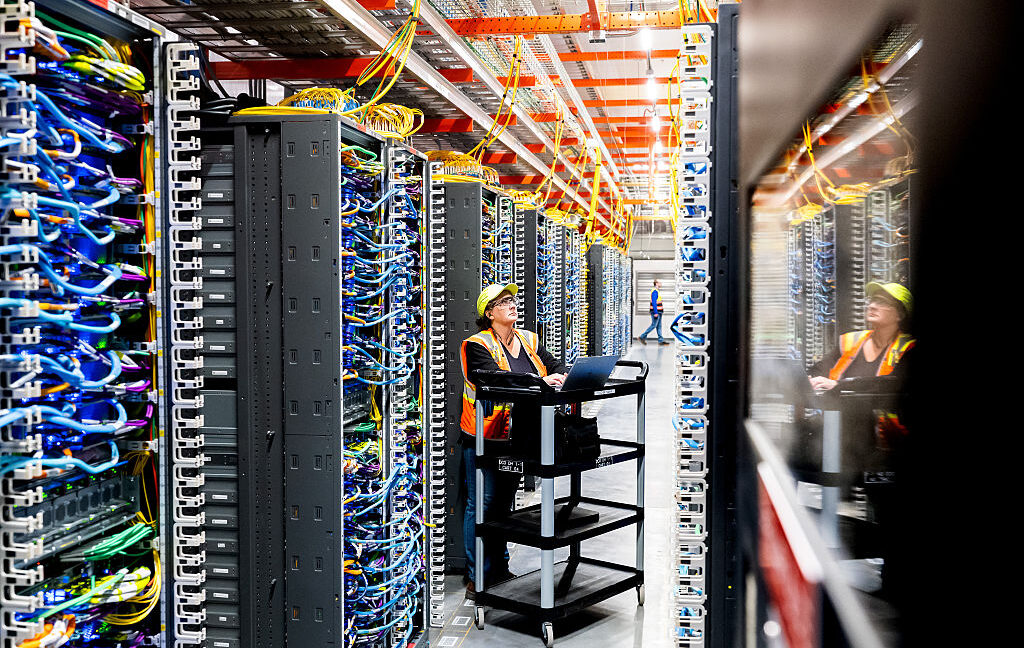

“If data centers end up providing less business to the utility companies than anticipated, consumers could be left with massive electricity bills as utility companies recoup billions in new infrastructure costs, with nothing to show for it,” senators wrote.
Already, Utah, Oregon, and Ohio have passed laws “creating a separate class of utility customer for data centers which includes basic financial safeguards such as upfront payments and longer contract length,” senators noted, and Virginia is notably weighing a similar law.
At least one study, The New York Times noted, suggested that data centers may have recently helped reduce electricity costs by spreading the costs of upgrades over more customers, but those outcomes varied by state and could not account for future AI demand.
“It remains unclear whether broader, sustained load growth will increase long-run average costs and prices,” Lawrence Berkeley National Laboratory researchers concluded. “In some cases, spikes in load growth can result in significant, near-term retail price increase.”
Until companies prove they’re paying their fair share, senators expect electricity bills to keep climbing, particularly in vulnerable areas. That will likely only increase pressure for regulators to intervene, the director of the Electricity Law Initiative at the Harvard Law School Environmental and Energy Law Program, Ari Peskoe, suggested in September.
“The utility business model is all about spreading costs of system expansion to everyone, because we all benefit from a reliable, robust electricity system,” Peskoe said. “But when it’s a single consumer that is using so much energy—basically that of an entire city—and when that new city happens to be owned by the wealthiest corporations in the world, I think it’s time to look at the fundamental assumptions of utility regulation and make sure that these facilities are really paying for all of the infrastructure costs to connect them to the system and to power them.”













Leave a Reply